
The Challenge
Trade publications make money differently to consumer sites. There are no affiliate links on a freight news site, because a reader is not going to buy a container ship through one. The revenue is advertising, sold to the logistics companies, software vendors and industry events that want to reach the people reading it.
That changes what the site has to be good at. A consumer site optimises for clicks out to a retailer. A trade publication optimises for a specific professional audience that advertisers will pay to reach, which means the design has to hold real ad inventory without the site turning into a page of banners nobody reads.
Dima needed a publication covering air cargo, ocean freight, logistics technology and industry events, built so that advertising had somewhere to live from day one rather than being squeezed in after launch.
What We Built
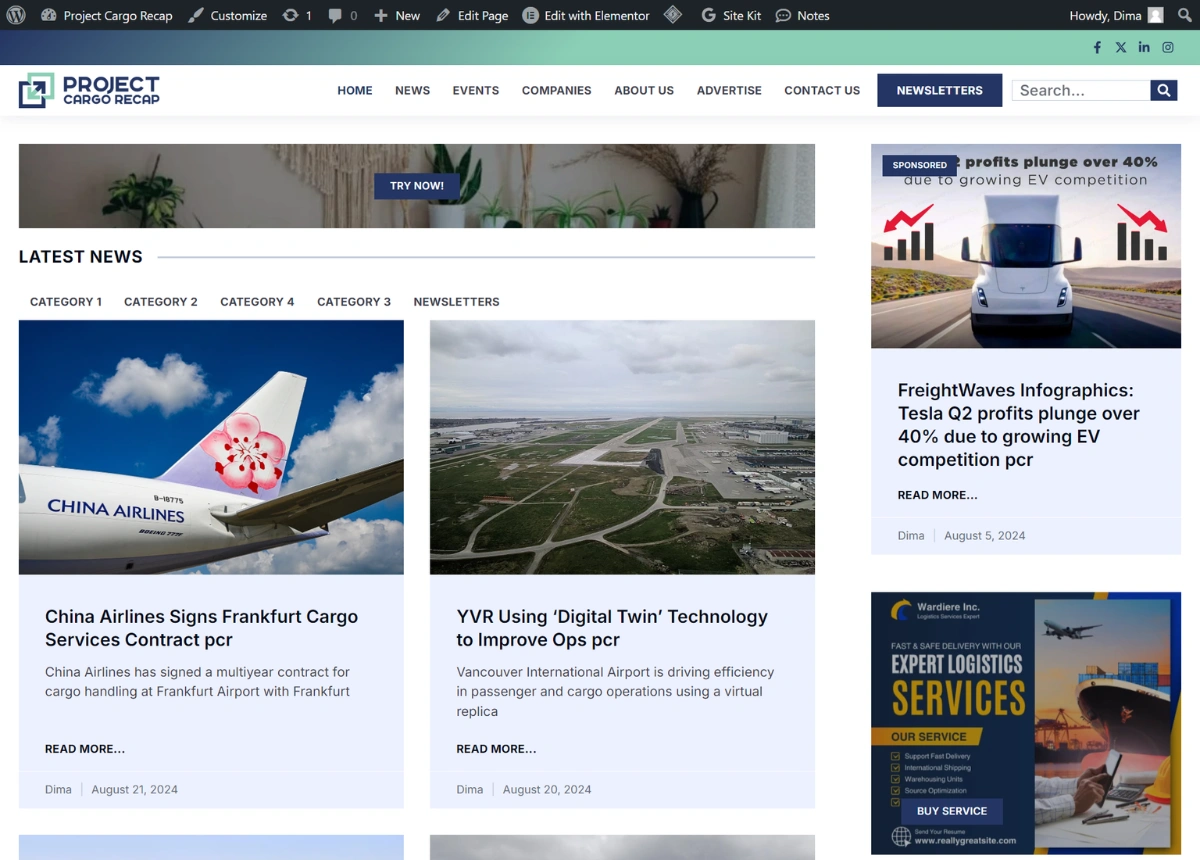
The layout is two columns for a reason. The main column carries the news feed in a two-across card grid, and the right rail is dedicated ad inventory running the full height of the page. Four display slots plus a sponsored story position at the top, all fixed sizes, all visible without scrolling past the fold.
Designing that rail as a permanent part of the layout rather than as widgets dropped into a sidebar matters commercially. Dima can quote a specific position at a specific size to an advertiser, the slots hold their shape whether they are filled or empty, and adding an advertiser never disturbs the page.
The sponsored story sits at the top of the rail styled like editorial content with a sponsored label above it. That position is the most valuable inventory on the page, and it is the format trade publications sell best, because an advertiser in this industry wants to be read rather than clicked.
Sponsored content also runs inside the news feed itself, which is how event partnerships work in this sector. A conference partnership appears as a card among the stories rather than as a banner, because it is genuinely relevant to the reader and performs far better than display.
The newsletter was built as a product rather than a signup box. Readers give a first name, a last name and an email, and choose between a daily recap and a weekly one. Those two choices matter more than they look. Frequency choice cuts unsubscribes, and a named list segmented by engagement is the asset a trade publication actually sells against. Newsletters get their own place in the navigation too, so past editions stay on the site as content.
Above the feed, a tabbed category filter lets readers move between sections without leaving the page, and a Load More button extends the feed in place. On a news site where visitors arrive daily, avoiding a page reload for every category change keeps people in the feed longer, which is exactly what an advertising model is paid on.
Events, Companies and Advertise all sit in the main navigation. That last one is not a formality. On a trade site the advertiser is a second audience, and giving them a route in from the top of every page is how inventory gets sold.
Running the Publication
Ad slots, sponsored placements and newsletter segments are all managed without touching a layout, so campaigns rotate as they are sold.
The feed and the rail scale independently. More stories fill the left, more advertisers fill the right, and neither one forces the other to be rebuilt.