The Challenge
Alfred came to us with an unusual brief. His daughter Maya makes beaded bracelets and necklaces by hand, and he wanted to turn that into a real shop rather than a hobby with a PayPal link. Not a page. A working business with a catalogue, payments, a mailing list and everything that sits behind those.
The pricing made it harder than it sounds. The pieces sell at €2.50 each. At that price shipping costs more than the product, a single sale loses money, and the whole thing only works if customers buy several at a time. Every decision on the store had to push toward that.
Handmade was the other half of the problem. It is the reason someone chooses a small maker over a chain, and it is completely invisible on a product card. A beaded bracelet photographed flat looks like every other beaded bracelet, including the machine-made ones selling for less.
What We Built
A full WooCommerce store with proper payment processing, cart, checkout, customer accounts and a newsletter, built the same way any commercial store is built. Alfred did not want something that would need replacing if it worked, and a store that starts as a simplified version usually ends up rebuilt within a year.
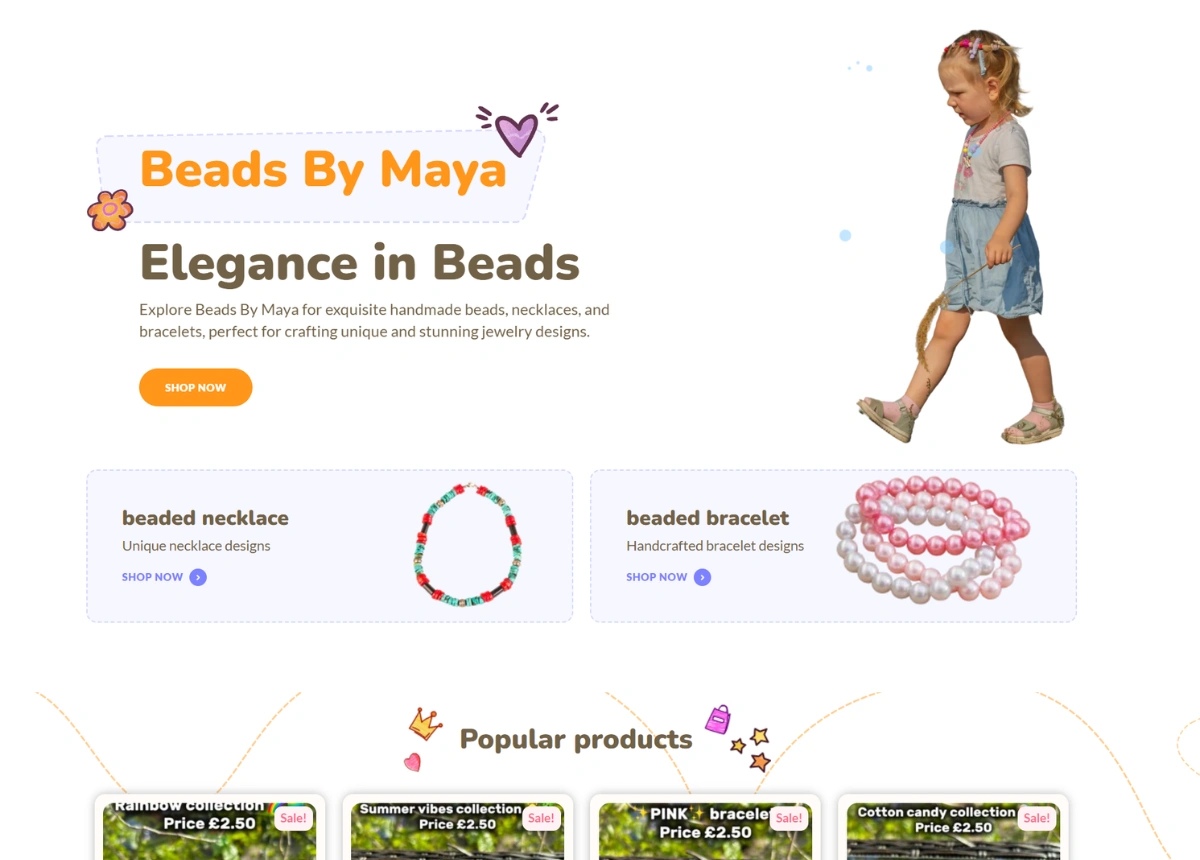
Multi-buy is designed into how the store presents itself rather than added as a discount. Pieces are grouped into named collections, Rainbow, Summer Vibes, Cotton Candy, Pink, so a visitor is looking at a set from the first screen instead of at one item with an add to cart button. At this price the single sale was never the goal, and the layout stops asking for one.
Sale pricing carries the grid with original prices struck through beside current ones, €3.00 down to €2.50 and €4.00 down to €2.50. On low-value impulse items the badge does more work than the description. Nobody reads a specification for a €2.50 bracelet, they decide in about a second.
A product gallery sits under the offer block showing the pieces as they really are, laid on driftwood, in a basket, photographed in daylight. That section carries the handmade part of the pitch. Clean studio shots would have made a young maker look like a dropshipper, and photographs that look taken rather than staged are what tell a customer a person made this.
The design runs warm and playful, hand-drawn florals, cream backgrounds, rounded orange buttons. It fits the maker and it fits the buyer, who is usually a parent shopping for their own child or a young customer buying for themselves. A minimal jewellery layout would have made €2.50 pieces look cheap. This one makes them look fun, which is the same information framed properly.
A blog runs underneath covering colour trends and collection stories, aimed at search traffic no product page will ever win. Nobody searches for this shop by name, but plenty of people search for beaded jewellery trends, and an article is a far cheaper way to reach them than paid ads on a €2.50 margin.
Running the Store
Collections, pricing, sale badges and orders are all handled inside WooCommerce, so adding a new range is products and a category rather than a design job. Maya makes the pieces, and putting them on the site takes minutes.
The layout holds at four products per row across every section, which keeps the shop looking stocked while only ever carrying as many pieces as have actually been made.