The Challenge
Emanuele was building a platform where a child’s drawing becomes an animated character in a personalized story, which can then be turned into a printed book, a video, or saved to the blockchain. Four different technologies in one product, aimed at families, heading toward a Kickstarter campaign.
A project at that stage has a specific problem. The product is not finished, the funding is not raised, and the site has to do the convincing anyway. It needs to make an unbuilt platform feel real enough that parents subscribe and backers commit, without overstating what exists today. Overpromise and the campaign collapses on delivery. Underplay it and nobody signs up.
There was a second tension in the concept itself. The platform uses AI and NFTs, and both of those words make parents cautious when children are involved.
What We Built
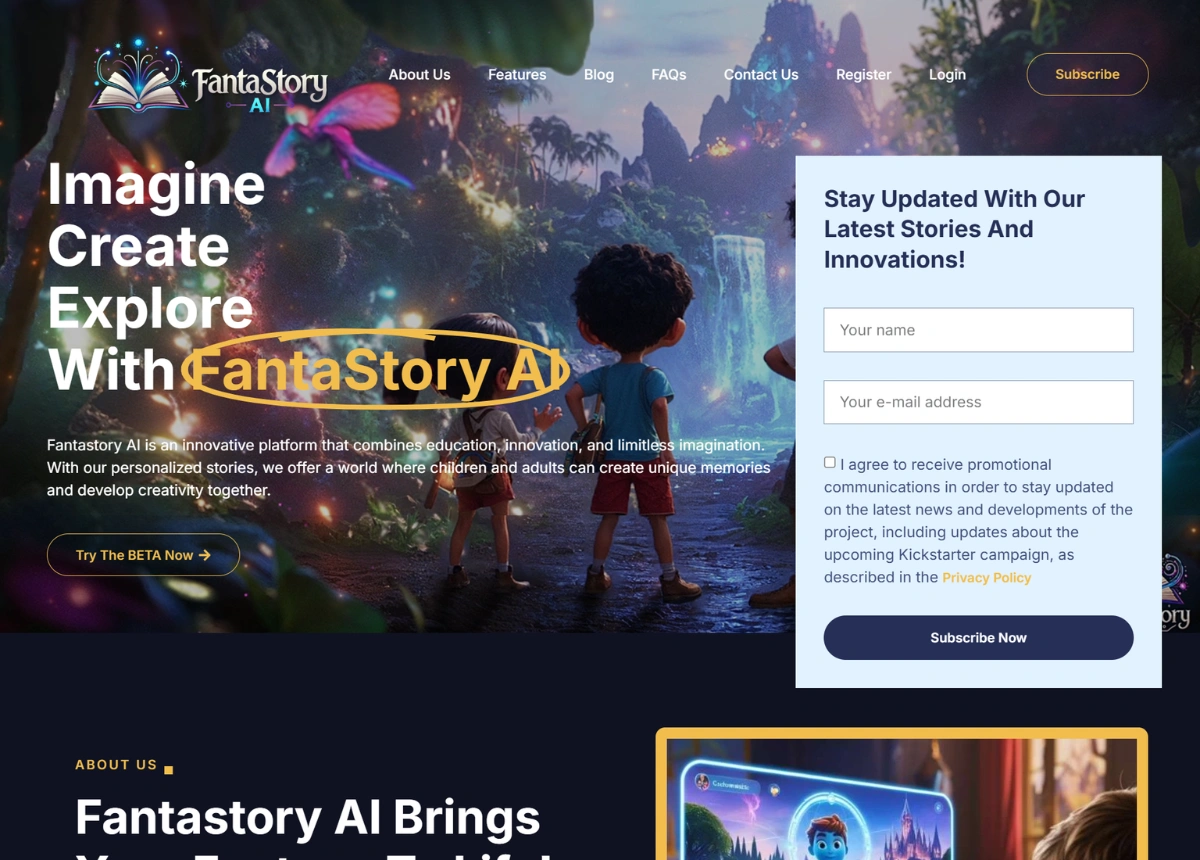
A single-page platform site with the beta app linked from the hero. Everything sits on one scroll, about, features, process, team, blog, gallery, FAQs and contact, because a visitor at the pre-launch stage is deciding whether to care at all, and every extra page load is a place to leave.
The positioning was written to disarm the objection before it forms. The about section states outright that the platform is not a replacement for physical books but a companion to reading, and that it exists to support a child’s development rather than to occupy them. For a parent weighing up an AI product for their kid, that sentence does more than any feature list.
NFTs got the same treatment in the FAQ, explained as a certificate that keeps the character a child made rather than as a crypto product. The language stays inside what a parent already cares about, which is holding onto something their child created.
A four-step process section walks through the flow from uploading a drawing to sharing the finished story, so the platform is understandable before anyone signs up. The gallery below it shows generated characters, which is the part that actually sells the idea. A parent looking at twelve finished characters understands the product in a way no description achieves.
The team section carries real people with real roles: founder, technical lead, marketing. On a project asking strangers for money before delivery, naming the people behind it is not a formality. It is most of the credibility a pre-launch site has.
Two subscription forms sit on the page, one in the hero and one further down, both collecting emails for the Kickstarter announcement with explicit consent wording tied to the privacy policy. That list is the real deliverable of this phase of the site. Everything else on the page exists to fill it.
Registration and login pages were built alongside the marketing site, and the beta app is linked directly from the hero so early users can try the story creation as it develops.
Where It Stands
The site launched ahead of the platform, doing the job a pre-launch site should do: explain an unfamiliar product, collect an audience, and give a founding team something credible to point at while the build continues.
The blog runs alongside it, covering NFTs and children’s creativity, so the project has content of its own to share rather than only announcements.