The Challenge
Streetwear does not sell the way normal apparel sells. A customer buying a jacket shops by category. A customer buying streetwear buys into a drop, and the drop is the thing they follow. Not Sorry Charlie releases in capsules, each one with its own idea behind it, and those capsules are what the audience talks about on TikTok and Instagram.
That creates a structural problem for a store. Someone arriving from a TikTok video about the M.O.B capsule wants that capsule, not a hoodies page. Someone arriving from a Google search for a bucket hat wants headwear and does not care which capsule it belongs to. Build the store around one of those and you lose the other, and most small apparel stores pick categories because that is what the theme comes with.
There was also the question of risk. A new label ordering inventory up front bets money on which designs sell, and most of that guess is wrong. The brand needed to release often without holding stock.
What We Built
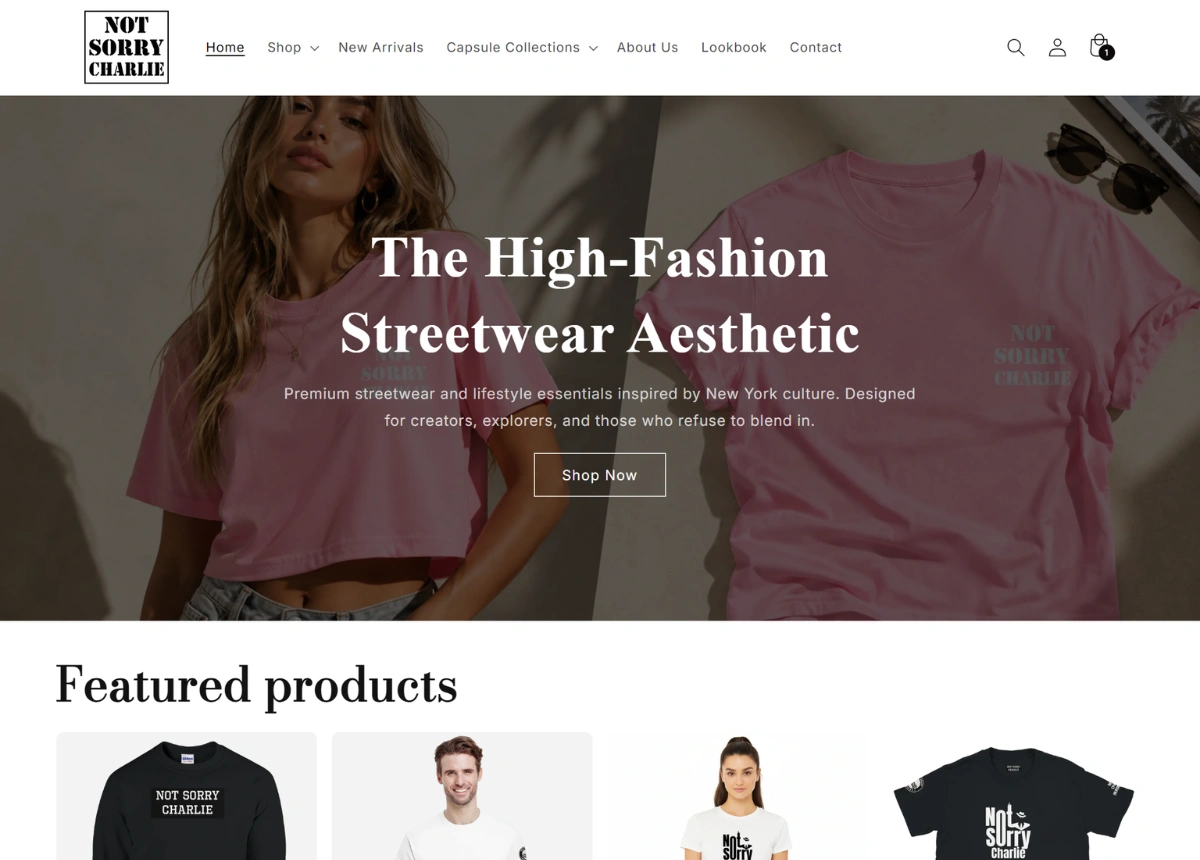
The store runs two navigation systems side by side. One is by product type, split into Clothing, Headwear and Bags, with the usual subcategories underneath. The other is by capsule, listing Freedom, M.O.B, Signature and They Love Themself as their own destinations in the main menu.
Both live in the header at the same level, so the store works for whichever way a customer arrives. Every product sits in a type collection and a capsule collection at once, which means a TikTok link and a Google result can both land on a page that makes sense without anything being duplicated.
Fulfilment runs on print on demand rather than held stock. Products are built on standard blanks from Gildan, Bella and Canvas, Flexfit and Cotton Heritage, and each item is produced after it sells. The brand can put out a capsule of eight pieces, see what moves, and drop the rest without money sitting in boxes. For a label at this stage that decision matters more than any design choice on the site.
Checkout takes PayPal and Venmo alongside cards. Venmo is not an obvious inclusion for most stores, but this brand sells to a young US audience, and asking that customer to find a card when Venmo is already on their phone loses sales at the last step.
Email capture was framed around drops instead of newsletters. Nobody signs up for updates from a clothing brand, but they will sign up for early access to a release that sells out. The block sits below the product grid where a browsing customer has already found something they want.
Around all of it: a sizing guide, an FAQ page, shipping and returns policies, and a lookbook. Sizing is the one that quietly decides returns. A store selling on blanks from four different manufacturers has four different fits, and a customer guessing at a size is a customer who sends it back.
Built for the Next Drop
Adding a capsule is a collection, a menu entry and the products inside it. Nothing about the layout changes, nothing needs rebuilding, and the brand can release on its own schedule.
Sold out pieces stay visible rather than disappearing, which for a drop-based label is part of the pitch. A page showing what is gone tells a returning customer that waiting has a cost.